> For the complete documentation index, see [llms.txt](https://docs.shopeasy.ai/llms.txt). Markdown versions of documentation pages are available by appending `.md` to page URLs; this page is available as [Markdown](https://docs.shopeasy.ai/staff-and-permissions.md).
# Staff and Permissions
One of the first actions you'll want to take after creating your store is adding user accounts to the control panel.
### Getting Started with Staff Roles
Welcome to Shopeasy's Staff Roles section! Here, you can define specific roles and permissions for your staff members. Follow these steps to get started:
#### Step 1: Accessing Staff Roles
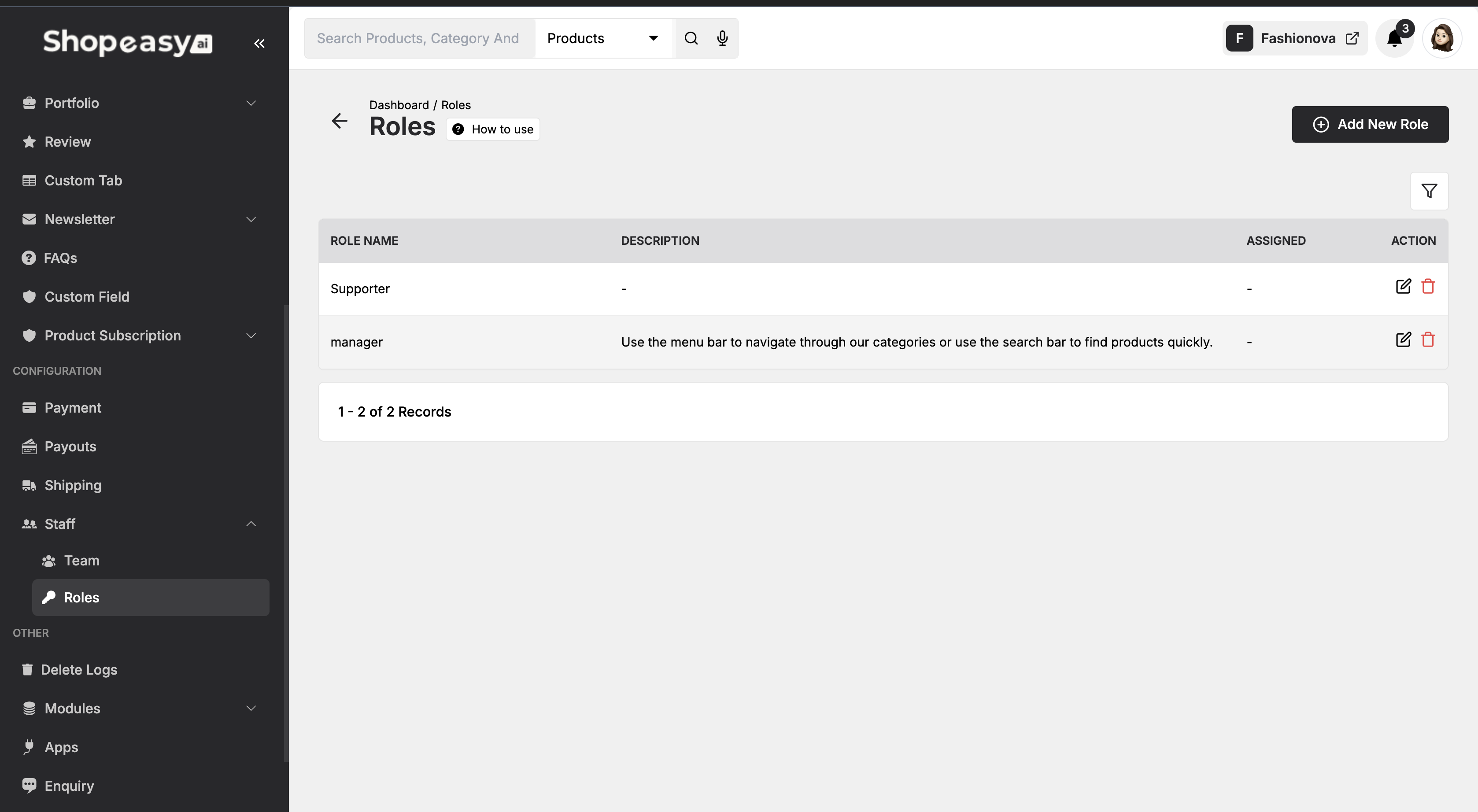
1. Navigate to **Configurations > Roles** in the sidebar to access the roles settings page.
2. In this section, you can create and manage different staff roles.
#### Step 2: Adding a New Role
1. Click on the **"Add New Role"** button.
2. Enter a **Role Name** to identify the new role (e.g., Admin, Sales, Support).
3. Provide a **Description** to give context to the role's responsibilities.
#### Step 3: Setting Permissions
1. Select the specific permissions you want to assign to this role. This determines what actions staff members with this role can perform.
#### Step 4: Saving the Role
1. Click **"Add Role"** to add the new role with the defined permissions.
#### Step 5: Managing Staff Roles
In this section, you can:
* View a list of existing roles.
* Edit role details and permissions.
* Delete roles if they are no longer needed.
#### Note:
* Assigning roles and permissions helps organize your staff members and defines their responsibilities within the platform.